
Traditions of Scottish and Irish Whiskey, part III
Unveiling the peculiarities and nuances between 2 main streams of whiskey crafting
CULTUREHISTORY
6/6/20246 min read
[Previously, Part I: The Causeway and the Divide]
[Previously, Part II: The Blender's Gambit]
Part III: The American Conquest
There exists a sardonic proverb which holds that every government inevitably makes correct decisions—after exhausting all alternatives. The United States Congress, in its wisdom, provided spectacular confirmation of this principle in 1918 when it enacted Prohibition.
The American writer Robert Heinlein, in his novel "The Moon Is a Harsh Mistress," observed a curious aspect of human nature regarding legislation: "Must be a yearning deep in human heart to stop other people from doing as they please. Rules, laws — always for other fellow... Because not one of those people said: 'Please pass this so that I won't be able to do something I know I should stop.' Nyet, tovarishchee, was always something they hated to see neighbors doing." This insight illuminates Prohibition's fundamental flaw: those who crafted and voted for the law did not genuinely intend to restrict themselves, but rather to control others' behavior.
The stated intention possessed undeniable nobility: to protect families from bankruptcy, intoxicated violence, traumatic injury, and the ravages of alcoholism. The execution, however, proved somewhat less admirable. By 1933, when this "noble experiment" concluded in acknowledged failure, the results told a cautionary tale. Alcohol consumption had indeed decreased — by approximately half. This represented neither triumph nor disaster, but rather demonstrated that the law simply did not function as intended. A successful prohibition would have reduced consumption to near zero. Instead, it created bootleggers, underground distilleries, and flourishing organized crime syndicates that persist to this day.
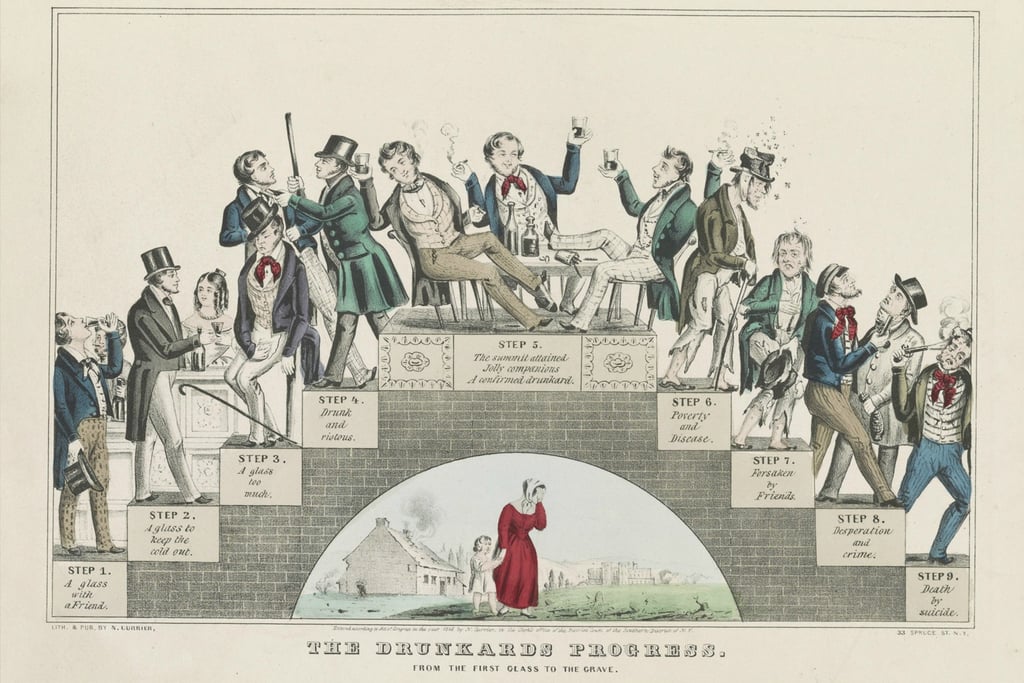
Most grievously, industrial alcohol was deliberately poisoned with methanol by governmental decree, resulting in approximately ten thousand deaths. The treatment, to employ medical terminology, proved palliative rather than etiotropic — it addressed symptoms whilst ignoring root causes.
The government perceived alcohol as the source of personal bankruptcy, violence, and disease. This represented a partially framed view, overlooking that ancient verity: alcohol serves as both cause and solution to life's troubles. People consume spirits to relieve pain — typically mental anguish rather than physical distress. They preferred a cotton-headed escape to confronting the reality that existence often resembles a rat race, a miserable progression from birth to grave, characterized by hopeless and endless stress. An etiotropic cure might have provided common purpose: defense of freedom, resistance to external threats, resolution of pressing crises. Instead, legislation created a vacuum in American drinking culture—the established social rituals, the convivial gathering places, the legitimate commerce of spirits all driven underground or extinguished entirely.
For fifteen years, American whiskey production stood virtually dormant. In a nation culturally disposed toward spirits — where a glass shared among friends had long served as lubricant for commerce, politics, and social bonds — this created opportunity of staggering proportions. Into this void stepped enterprises capable of meeting demand — chief among them, John Walker's operation with its seemingly bottomless supply chain.
Here we must pause to consider why Scottish enterprise, rather than Irish, seized this moment. The answer lies in events transpiring half a century earlier. The Great Famine of the 1840s — that catastrophic failure of the potato crop — drove millions of Irish survivors across the Atlantic. By the dawn of the twentieth century, America found itself, shall we say, rather thoroughly supplied with Irish immigrants and their descendants. This demographic reality, regrettably, fostered a strain of anti-Irish sentiment among certain American circles — that peculiar prejudice which surfaces when the established resent the newly arrived, regardless of the latter's contributions to commerce and culture.
More consequentially for our present inquiry, Ireland's own industrial capacity lay devastated by decades of economic disruption following the Famine. The distilleries, the supply chains, the very infrastructure of spirits production had suffered grievously. When Prohibition created that enormous American demand for imported spirits, Ireland simply lacked the capacity to respond at scale. The whiskey was there, perhaps, but not in quantities sufficient to satisfy a thirsty continent. Scotland, having escaped such devastation, possessed both the productive capacity and — crucially — the absence of negative cultural associations that might have impeded market penetration.
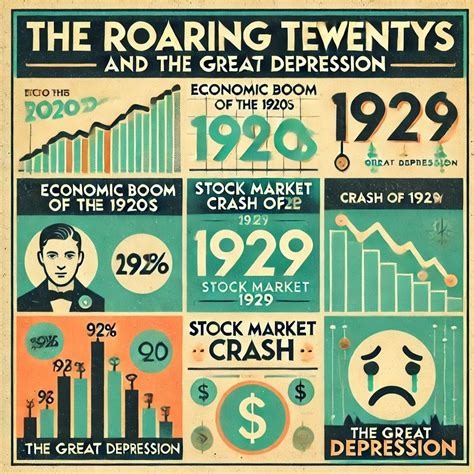
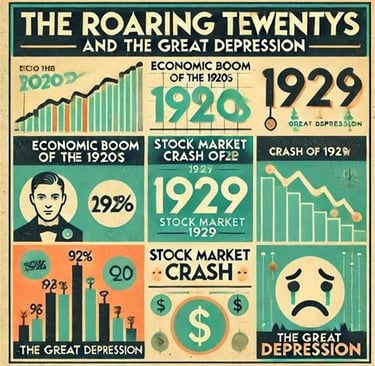
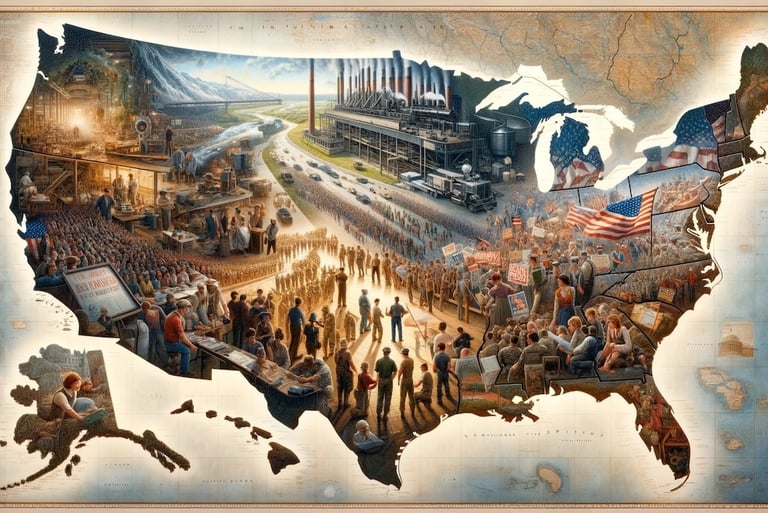
The twentieth century witnessed America's emergence as global arbiter of commerce and culture — becoming, as certain politicians would later proclaim with characteristic bombast, "great" through economic and cultural dominance rather than legislative wisdom. Through American influence, aviation and communication (telephone, radio, TV, Internet) became affordable; consumerism transformed into standard practice; entertainment (movies, music, shows, literature, stand-ups, etc.) evolved into industry. For approximately a century, American consumption equaled 40% of worldwide demand for virtually every product. Day-by-day, year-by-year. Consider this carefully: one nation dictated global preferences through sheer purchasing power. An industrial axiom emerged among entrepreneurs: success in America guaranteed acceptance everywhere. If Americans embraced your product, the world would follow.
Walker's enterprise, unburdened by rigid tradition and blessed with flexible supply, captured the thirsty American market. Americans incorporated "Scotch" into every form of entertainment. Entertainment, amplified by modern communication, became viral. Thus blended Scotch came to dominate—not through superior quality necessarily, but through superior positioning at a critical historical juncture.
So Scotch whisky won the American market by the beverage, revenues, popularity... but not by the spelling. Americans spell the whiskey by Irish tradition. Fair enough division of influences :)
A Practical Comparison of Methods
Having examined the technical distinctions in our first discourse and the commercial dynamics in our second, we arrive at a question of immediate, practical consequence: How do these differences manifest in the glass before you?
The Irish distillers take considerable pride in their triple distillation, claiming it produces a whiskey notably smoother and less harsh upon the throat. The Scottish craftsmen, for their part, respond with characteristic humor: "The Irish simply require three steps to accomplish what we achieve in two." Is this claim accurate? Perhaps. Perhaps not. I would counsel you to conduct your own investigation, for it is your throat and your sensibilities that ultimately matter. Nevertheless, a substantial number of experts concur with the Irish assessment — though one must acknowledge that certain Scottish expressions demonstrate smoothness rivaling any Irish dram.
Regarding the nose and palate, Irish whiskey typically presents floral and fruity characteristics, frequently accompanied by spice notes: vanilla, cinnamon, allspice, and their aromatic cousins. One knows, generally speaking, what to anticipate.
The Scotches, conversely, prove decidedly unpredictable. To develop any reasonable expectation, one must study the label with care, develop familiarity with Scottish geography and regional industrial practices. The aromatic spectrum proves remarkably broad — from peat and smoke at one extreme to clove and banana at the other. The variation depends entirely upon the particular craft traditions employed, the regional character, and the distillery's individual methods. Where Irish whiskey offers consistency, Scottish whisky offers adventure — and occasional surprise.
The Individual's Choice
What, then, does tradition signify from the consumer's perspective?
For the majority, remarkably little. Most cannot distinguish peat from smoke, much less discern subtle notes of lychee or berberis within an aggressive forty-percent spirit. They drink to forget daily burdens for several hours. Their criteria prove elementary: recognition (what they have heard), experience (what they have previously tasted), and affordability (what their purse permits).
A minority — connoisseurs, if you will — drink consciously, engaging all five senses whilst studying their subject. For them, history, tradition, competition scores, and crafting variations coalesce into appreciation and respect. If you, dear reader, have reached this sentence, consider yourself among their number.
In conclusion, tradition may signify nothing or everything to the person holding the glass — a private matter of preference. It does not render alternative traditions inferior or less worthy of regard. Indeed, I encourage you to explore and comprehend the alternatives. Perhaps you shall discover methods that suit your particular style and circumstances. The world contains many discoveries yet to be made. May you never cease to amuse yourself with new knowledge.
As the Irish Giant understood, and as the Scottish Giant learned through consequence, wisdom sometimes achieves what force cannot. The best battles are those successfully avoided — or better still, transformed into opportunities for understanding rather than conquest.
Sláinte mhath, as the Scots say. Sláinte, reply the Irish. Both mean simply: good health.
[End of Series]
Contact
Questions or thoughts? Reach out anytime.
info@quantumsatis.site
Phone: TBD
© 2026. All rights reserved.