
The Social Influence of Alcohol: A Double-Edged Sword, part I
The Bright Side: When Alcohol Brings Us Together
SCIENCEHISTORYCULTURE
2/2/20256 min read
Introduction
Alcohol has been humanity's companion for at least 13,000 years — longer than we've had written language, cities, or the wheel. If it were purely destructive, we would have abandoned it millennia ago. If it were purely beneficial, we wouldn't see the devastating social costs documented by researchers worldwide. The truth, as usual, lies somewhere in the messy middle where humans actually live.
This article examines the social influences of alcohol — not its effects on your liver or brain cells (that's for another discussion), but how it shapes our relationships, our communities, our economies, and sometimes, unfortunately, our criminal justice systems.
The Bright Side: When Alcohol Brings Us Together
1. Social Bonding and Group Cohesion: The "Golden Moments" Effect
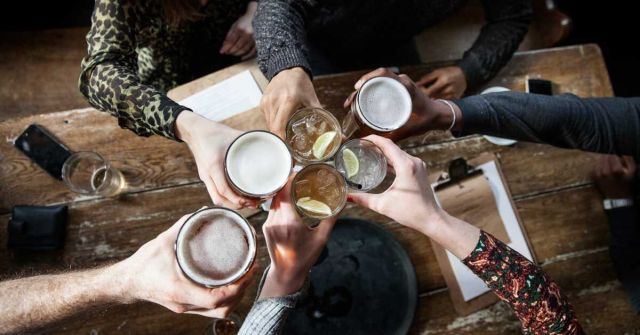
Researchers at the University of Pittsburgh gathered 720 people into small groups and gave some of them moderate amounts of alcohol while others received non-alcoholic beverages. Then they watched what happened. The results were striking: the alcohol groups showed enhanced positive emotions, increased social bonding, reduced negative emotions, and — here's the fascinating part — increased what researchers call "true smiles" (Duchenne smiles, which involve the eye muscles and indicate genuine happiness, not the fake grins we paste on at awkward dinner parties). Most intriguingly, they observed increased "smile coordination," dubbed "golden moments," where group members smiled together simultaneously.
In another study, Oxford University researchers found that people who had a regular local pub — not just any bar, but a true "local" — had measurably larger social networks, greater community engagement, more trust in their neighbors, and higher overall life satisfaction compared to those without such a regular gathering place.
Samuel Johnson, the famous 18th-century writer and wit, spent countless evenings at London taverns. When asked why he wasted so much time drinking with companions, he replied: "There is nothing which has yet been contrived by man, by which so much happiness is produced as by a good tavern." Johnson's tavern companions included some of the brightest minds of his era — Edmund Burke, Oliver Goldsmith, Joshua Reynolds — and many of their ideas were first tested in conversation over pints before becoming influential books and paintings.
Moderate alcohol consumption in social settings appears to act as a social lubricant—reducing anxiety, enhancing positive emotions, and creating moments of genuine connection. The "golden moments" of synchronized smiling suggest alcohol helps groups achieve a kind of emotional harmony that's harder to reach stone-cold sober.
Michael Zhvanetsky, a famous satirist said: “Alcohol in small doses is harmless in any quantity.”
2. Business Facilitation: When Deals Are Sealed Over Drinks
"Love makes the world go round? Not at all. Whiskey makes it go round twice as fast." — Compton Mackenzie
A fascinating study in East Asia found that alcohol consumption actively facilitates business connections by making people feel more relaxed, approachable, and willing to engage in collaborative ventures.
Researchers tested this experimentally with 114 participants in bargaining games. Those who consumed mild alcohol (equivalent to 350ml of beer) showed increased collaboration compared to sober negotiators. The key insight: in situations where mutual skepticism can lead to negotiation breakdowns, a small amount of alcohol helps people "drop their guard," facilitating agreement.
Even more intriguing: a German study found that drinking cocktails improved earnings for urban workers, while drinking beer improved earnings in rural areas. The researchers attributed this to alcohol's positive effect on developing social networks — with different drinks signaling membership in different social/professional circles.
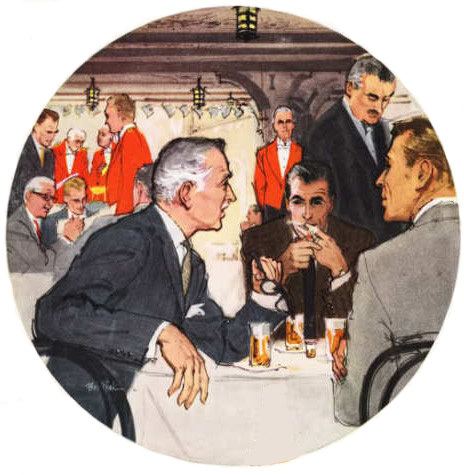
During the Mad Men era of American advertising (1950s-1960s), the "three-martini lunch" was a standard business practice. Advertising executives would take clients to expensive restaurants, consume several cocktails and a lavish meal, and often close deals worth millions. The IRS even allowed these lunches as tax-deductible business expenses until the Tax Reform Act of 1986 limited the deduction. While we might cringe at the excess today, those boozy lunches genuinely facilitated billions of dollars in commerce.
Moderate alcohol consumption appears to reduce social friction in business settings, making negotiations smoother and collaborations more likely. However, there's a sweet spot where alcohol helps, and a tipping point where it destroys.
“Three things in the world banish sorrow—love and whiskey and music.”
Herminie Templeton Kavanagh
3. Cultural and Historical Significance: From Accident to Intention
Our relationship with alcohol likely began by accident. The origin of alcoholic beverages is shrouded in prehistory, but researchers believe fermentation occurred naturally when wild yeasts in the air acted on mashed sugar-rich foods—grapes, grains, honey. Early humans discovered alcohol by noticing its intoxicating effects.
The earliest confirmed evidence of human-made alcohol comes from Raqefet Cave near Haifa, Israel, where the Natufian people brewed beer approximately 13,000 years ago. This discovery fundamentally changed our understanding of early civilization — these people were brewing beer before they developed agriculture. This suggests alcohol production developed for ritual purposes and spiritual needs, not as a byproduct of farming surplus.
Controlled fermentation appeared later. Chemical analyses found the earliest confirmed alcoholic beverage was a mixed fermented drink of rice, honey, and hawthorn fruit or grape, with residues dated to 7000-6600 BCE recovered from pottery in Jiahu, a Neolithic village in China's Yellow River Valley.
The reliable agricultural production necessary for consistent alcohol supply began between 9,500 and 6,000 BCE when humans founded settlements in the Fertile Crescent, along the Nile (Egypt nowadays), and in the flood plains of China's Yangtze and Yellow Rivers, domesticating plants and animals.
Nearly every civilization independently discovered brewing beer, fermenting wine, and eventually distilling spirits. Alcohol became integral to religious rituals, social festivities, and cultural identity across millennia. The transformation from raw ingredients to fermented beverages was seen as conferring "life force" and carried symbolic meanings suitable for ritual and political events.
When Spanish conquistadors arrived in Mexico in the 16th century, they found the Aztecs brewing pulque, a fermented beverage from agave sap, which played a central role in religious ceremonies. The Aztecs had strict laws limiting who could drink and when — commoners caught drinking outside religious festivals faced the death penalty. The goddess Mayahuel, depicted with 400 breasts, was said to nourish the gods themselves with pulque. The Spanish, who brought their own wine-drinking traditions, initially tried to ban pulque production, then gave up and started brewing it themselves.
Alcohol isn't just a chemical compound — it's a cultural artifact with 13,000 years of accumulated meaning. From Natufian beer rituals to modern whiskey tastings, alcohol has served as a medium for community building, religious experience, and cultural identity.
4. Ritual and Ceremonial Functions: Marking Life's Moments
Research into cultural drinking patterns reveals protective factors in certain traditions. In Jewish culture, participation in traditional rituals and group obligations associated with moderate consumption correlates with lower rates of alcohol abuse and higher rates of sobriety. In Italian culture, consumption within the context of family meals provides similar protective effects against misuse. Both traditions are pretty clever: banned things attract and excite the interest. Regulated traditions help people develop better behavior.
Traditional functions of alcohol across cultures include: facilitating religious ecstasy and communion with supernatural powers, enabling periodic social festivities, forging alliances, and marking significant life events and celebrations.
In traditional Japanese business culture, nomikai (literally "drinking meeting") serves a crucial social function. After work, colleagues gather at izakayas (Japanese pubs) to drink together. What's said during nomikai is considered separate from official workplace conduct — a kind of social pressure valve where subordinates can speak more freely to superiors, and everyone can drop their formal masks. This tradition is so important that declining a nomikai invitation can be seen as antisocial or untrustworthy. The japanese saying goes: "your true feelings versus your public face” — and alcohol is the bridge between them.
When embedded in structured cultural rituals — religious ceremonies, family meals, community celebrations — alcohol serves as a social technology for marking important transitions, building group solidarity, and creating shared experiences. The key protective factor appears to be clear social rules about when, where, and how much.
5. Economic Benefits: Jobs and Tax Revenue
In the United States alone, the alcohol beverage industry sustains more than 4 million jobs and generates almost $70 billion in annual tax revenue.
This represents a massive economic ecosystem: farmers growing grain and grapes, manufacturers producing bottles and barrels, distributors moving product, retailers selling it, restaurants and bars serving it, and government agencies regulating and taxing it.
During America's Prohibition era (1920-1933), the federal government lost approximately $11 billion in tax revenue (equivalent to roughly $180 billion today). Meanwhile, organized crime figures like Al Capone earned an estimated $100 million annually from illegal alcohol sales. When asked how he made so much money, Capone reportedly said: "I give the public what the public wants. I never had to send out high-pressure salesmen. Why, I could never meet the demand."
Whether we like it or not, alcohol is a massive economic engine. Those 4 million American jobs represent real families paying mortgages and sending kids to college. The $70 billion in tax revenue funds roads, schools, and public services. This doesn't make alcohol inherently good, but it does make prohibition economically complicated.
Contact
Questions or thoughts? Reach out anytime.
info@quantumsatis.site
Phone: TBD
© 2026. All rights reserved.