The Social Influence of Alcohol: A Double-Edged Sword, part II
The Dark Side: When Alcohol Tears Us Apart
HISTORYSCIENCECULTURE
1/3/20256 min read
Part I: The Bright Side: When Alcohol Brings Us Together
The Dark Side: When Alcohol Tears Us Apart
1. Violence and Crime: The Ugly Truth
The statistics are sobering (pun intended). In the United States, approximately 7,756 homicides per year are attributable to alcohol. Research shows that 48% of homicide offenders had been drinking immediately before committing murder, and 37% were legally intoxicated during the act. Among violent crime inmates, 21% were under the influence of alcohol when they committed their crimes.
In the United Kingdom, alcohol is associated with over 4 million crimes per year, including 500,000 violent crimes. In 39% of all violent crimes, the victim believed the offender was under the influence of alcohol.
Alcohol doesn't cause violence in the way gravity causes falling — it's not a direct, inevitable relationship. Rather, alcohol acts as a disinhibitor (a substance that reduces psychological inhibitions, or, simply “accelerator”) and impairs judgment and impulse control. People who might restrain violent impulses while sober find those restraints weakened or removed when intoxicated.
Ernest Hemingway, the famous American writer, was known for both his prodigious drinking and his violent behavior when drunk. His fourth wife, Mary, kept a diary documenting his alcohol-fueled rages. In one incident at their Cuban home, Hemingway fired his shotgun at the ceiling, then at Mary's prized portrait, creating holes around her painted head. The next morning, sober, he couldn't remember the incident and was horrified when told what he'd done. This pattern — violence while drunk, remorse while sober — repeated throughout his life.
Roughly 8,000 Americans are murdered each year in alcohol-related homicides. That's more than twice the number killed in the September 11 attacks — except it happens every single year. In the UK, alcohol-related crime costs society billions in police, courts, prisons, and victim services.
2. Domestic and Intimate Partner Violence: Behind Closed Doors
Alcohol played a role in 55% of domestic violence cases and 65% of spousal violence cases, according to research data. Two-thirds of victims who were attacked by an intimate partner reported that alcohol was involved in the incident.
Nearly 4 in 10 child victimizers reported drinking at the time they committed crimes against children.
A study in Baltimore City found that each increase in the number of alcohol outlets in a neighborhood was associated with a 2.2% increase in violent crime. Furthermore, intimate partner violence incidents were more severe when one or both partners had been drinking before the incident.
For every romantic Hollywood scene of cocktails and seduction, there's a darker reality: alcohol is present in the majority of domestic violence incidents. The privacy of homes makes these crimes particularly difficult to prevent or prosecute. Children growing up in households with alcohol-fueled violence carry psychological scars that can last lifetimes.
3. Corruption and Bribery: The Lubricant of Illegal Business
"He had never found that more than five whiskeys and soda were beneficial to law-practice." — Sinclair Lewis, Mantrap
Research in China found that government officials establish firm ties through lavish banquets with flowing alcohol. Baijiu (a strong Chinese spirit) works as both currency for bribery and lubricant for political connections facilitating corruption. President Xi Jinping's anti-corruption campaign specifically targeted these boozy banquets with "Alcohol Bans."
In the same study examining Chinese firms found that drinking-facilitated business relationships led auditors to underestimate engagement risk and reduce audit effort, ultimately resulting in lower audit fees. The evidence suggests drinking affects audit pricing through erosion of auditor independence — in plain English, the auditors got too friendly with the people they were supposed to be scrutinizing.
Using data from Chinese firms between 2004-2019, researchers revealed a positive association between local alcohol culture and corporate risk-taking. Local alcohol cultures affect a firm's ability to overcome lack of property rights protection through illegal and unethical practices used to gain business opportunities.
A cross-sectional study found the nexus between alcohol and corruption to be positive across multiple countries—the depth of drinking alcohol showed a significant positive correlation with levels of corruption.
During U.S. Prohibition, organized crime boss George Remus estimated that half of his illegal alcohol receipts went directly to bribes. U.S. Attorney General Harry Daugherty was found guilty of selling bootleg whiskey licenses, granting pardons to offenders, and taking bribes. Corruption existed from cops on the beat all the way up to the Attorney General himself — a complete breakdown of law enforcement funded by illegal alcohol money.
The same social lubrication that helps close legitimate business deals can facilitate corrupt ones. The relaxed atmosphere, lowered inhibitions, and sense of shared experience created by drinking together can make illegal proposals feel more acceptable. When everyone's had a few drinks, the line between networking and bribery gets blurry.
4. Workplace Productivity Losses: The Economic Hangover
The economic costs of alcohol worldwide amount to 1,306 international dollars per adult or 2.6% of global GDP annually. Remarkably, 61.2% of these costs result from productivity losses — not healthcare or crime, but simply lost work. Projections suggest GDP will be 1.6% lower on average in OECD countries annually over the next 30 years due to alcohol-related productivity losses.
In the United States specifically, alcohol use disorder is responsible for 232 million missed work days annually. The total economic burden reaches $249 billion, with 72% resulting from workplace productivity losses.
Let's make this concrete. For every 100 employees, alcohol costs equals one person not showing up every day. Along the year. That's not counting reduced productivity from hungover employees who do show up but perform poorly.
Winston Churchill was famous for drinking throughout the day — whiskey with breakfast, champagne with lunch, cognac in the evening. When Lady Astor once told him, "Winston, you're drunk!", he replied: "And you, Bessie, are ugly. But I shall be sober in the morning, and you will still be ugly." Witty, perhaps, but Churchill's doctors estimated his alcohol consumption at levels that would hospitalize most people. Yet he led Britain through World War II and lived to 90. The lesson? Churchill was an extraordinary outlier. For every one Churchill, there are thousands whose careers and health are destroyed by similar drinking patterns.
Alcohol costs the global economy 2.6% of GDP annually—that's roughly $2.8 trillion. To put that in perspective, that's more than the entire GDP of the United Kingdom. Every year. Forever.
5. Family and Household Impact: The Ripple Effect
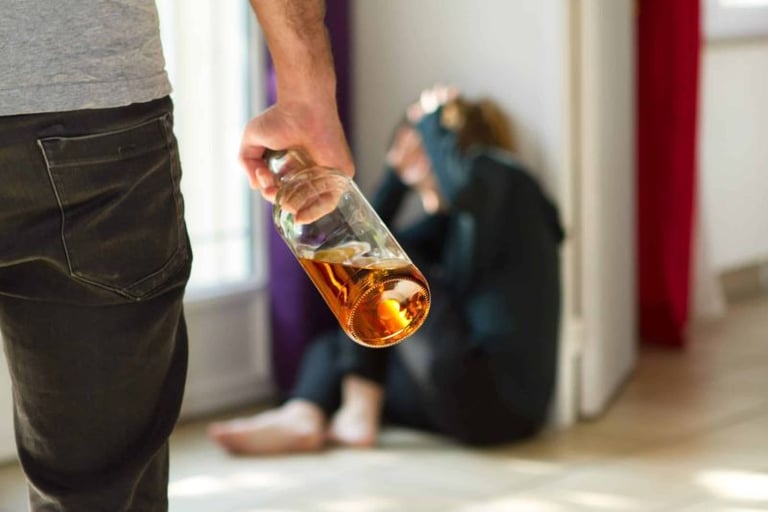
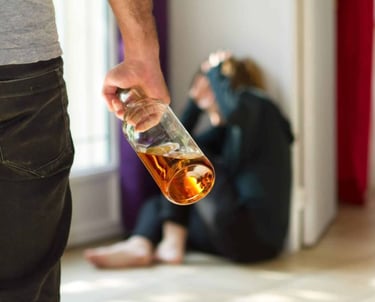
Children of substance-abusing parents are almost three times more likely to be physically or sexually abused and more than four times more likely to be neglected compared to children of non-abusing parents. Parental drinking leads to substantial mental health problems for family members, including anxiety, fear, and depression.
The financial costs of alcohol purchase and medical treatment can leave family members destitute — money that could have gone to children's education or family needs instead goes to alcohol and its consequences.
Alcoholism doesn't just affect the drinker — it radiates outward like ripples from a stone thrown in water. Spouses develop anxiety and depression. Children suffer neglect or abuse. Family finances collapse. The drunk person might not remember what happened, but everyone else does.
6. Social Contagion: Drinking Spreads Like a Virus
The famous Framingham Heart Study, which tracked social networks over decades, found that for every heavy drinker or abstainer in your social network, the probability that a moderate drinker will adopt their drinking behavior increases by 40%. Alcohol consumption spreads through social networks similarly to infectious diseases — if your friends drink heavily, you're likely to drink more; if they don't drink, you're likely to drink less.
This phenomenon is called social contagion (the spread of behaviors, emotions, or ideas through social networks), and it operates through several pathways: peer pressure (direct or indirect encouragement to conform), social norms (what's considered "normal" in your group), and availability (if everyone around you drinks, alcohol is always present).
F. Scott Fitzgerald and Ernest Hemingway were both heavy drinkers who belonged to the same social circle of expatriate writers in 1920s Paris. Their mutual friend, the poet Ezra Pound, worried about their drinking and wrote: "The intoxication of strong drink is often necessary to make a man sufficiently animal and realistic." But Fitzgerald died at 44 from alcohol-related heart failure, and Hemingway's drinking contributed to the depression that led to his suicide at 61. Their talent didn't protect them — and their drinking habits reinforced each other's destructive patterns.
Choose your drinking companions carefully. If you regularly socialize with heavy drinkers, you'll likely become one. If your social circle practices moderate, mindful drinking, you'll likely follow suit. We like to think we're independent actors, but we're social creatures who mirror those around us.
Conclusion: The Quantum Satis Principle
So where does this leave us? Alcohol has been part of human civilization for 13,000 years. It facilitates social bonding, lubricates business deals, marks important cultural moments, and generates massive economic benefits. It also contributes to violence, domestic abuse, corruption, lost productivity, broken families, and spreads harmful drinking patterns through social networks.
The difference between alcohol as social glue and alcohol as social solvent often comes down to three factors:
Quantity: The difference between one thoughtful dram and five hurried shots
Context: Drinking at a family meal versus drinking alone to forget
Intention: Drinking to enhance experience versus drinking to escape it
This brings us back to the principle that guides Quantum Satis: as much as needed, no more, no less.
The question isn't whether alcohol is good or bad. It's both, depending on how we use it. Like a hammer: you can use it to build a house or to crush someone’s skull. The question is: can we be mindful enough to extract the benefits while avoiding the harms?
Based on the research presented here, the answer seems to be: sometimes, if we're very careful, and often, not at all.
Contact
Questions or thoughts? Reach out anytime.
info@quantumsatis.site
Phone: TBD
© 2026. All rights reserved.