
Why is your whiskey so expensive?
Funny yet serious reasoning to one of the most frequently asked questions. Satisfaction guaranteed
FAQCULTURE
10/10/20247 min read
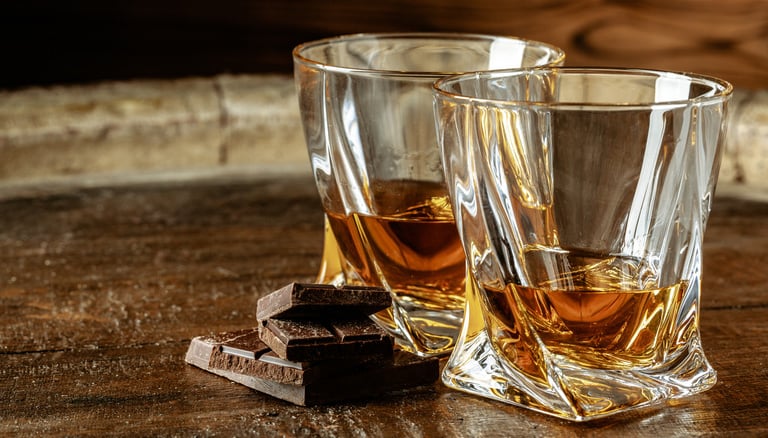
"Whiskey, like a beautiful woman, demands appreciation. You gaze first, then it's time to drink."
— Haruki Murakami
A Meditation on Value, Scarcity, and the Wisdom of Not Gulping
The question of expense is like asking why the sky is blue or why politicians promise much and deliver little—it all depends on where you're standing when you ask it. A man who pays ten dollars for a bottle of rotgut considers himself frugal. A man who pays a hundred for a fancy label considers himself a connoisseur. And a man who pays nothing because he's making it in his barn considers himself either a criminal or a craftsman, depending on which side of the revenuers he finds himself.
Now, when folks wrinkle their noses at our prices, I'm reminded of old Colonel Henderson back in Hannibal, who once complained that Doc Johnson charged him five dollars to lance a boil. "Five dollars!" the Colonel thundered. "Why, I could have done that myself for nothing!" To which Doc replied, "Well, Colonel, next time you're sitting down, I recommend you try." Some things, you see, require a professional touch — and a certain angle of approach that amateurs lack.
On the Relativity of "Expensive"
Let me lay out the arithmetic, plain as day. Walk into any respectable spirits emporium — assuming you can find one that hasn't been converted into a cryptocurrency exchange or artisanal cupcake shop — and you'll discover mass-produced single malts commanding prices that would make a riverboat gambler blush. Bottles that rolled off assembly lines by the thousands, each one tasting precisely like its ten thousand siblings, fetching sums that suggest the distillery has confused whiskey-making with alchemy.
We fall squarely into the typical price range for rare single malts. Nothing extraordinary about that, mathematically speaking. But here's where the plot thickens, as they say in those detective stories that my friend Mr. Conan Doyle writes: our liquid gold isn't merely rare — it's damn near impossible to find, like an honest opinion in Washington or a brief sermon from a Baptist preacher.
Our production amounts to a few bottles per year. Not a few hundred. Not even a few dozen. A few. If you're counting on both hands, you're probably overshooting. For such a super-rare gem — and I use that word advisedly, for this whiskey sparkles in the glass like morning dew on a spider's web — our price sits at ground level. It's practically a public service.
The Economics of Not Getting Rich
Now, I should confess something that might shock those versed in modern business principles: our family distillery is not going to get rich selling ten bottles a year. This revelation, I realize, puts us somewhat at odds with contemporary capitalism, which prefers its profits to arrive by the freight car rather than the thimble.
But here's the curious thing about money — and I say this as a man who has had it, lost it, and contemplated its meaning while watching the Cervo stream flow past — it's not the only currency worth counting. We truly believe — and I don't use that word lightly, having spent considerable time in Nevada where belief and gullibility often share a bed — that we're offering real aficionados a magnificent sipping experience. Something that makes a man pause mid-sentence, set down his glass, and say, "Well, I'll be damned."
There's another angle to this that the accountants never put in their ledgers. When a fellow shares a portion of our whiskey with friends, something magical happens. His reputation rises like bread dough on a warm morning. The value of that elevation — being known as the man with that whiskey, the one that makes strong men weep and poets reach for inadequate metaphors — exceeds the cost of the bottle several times over.
I once knew one printer in Midleton (Ireland) bought a rare book for what seemed an outrageous sum. His wife nearly divorced him over it. But every visitor who came to their home heard about that book. They asked to see it. They spoke of it in town. That printer became known as a man of culture and discernment. He got elected to the school board, which he'd been trying to achieve for years, and I'm convinced that book did more for his standing than all his campaign promises combined. The bottle worked cheaper than the election would have.
On Booze, Medicine, and the Proper Use of Spirits
Mr. Haruki Murakami — who knows a thing or two about whiskey and loneliness, apparently in equal measure — once wrote “I contented myself with whiskey, for medicinal purposes. It helped numb my various aches and pains.” This is true in the same way that a hammer can serve as a back-scratcher: technically accurate but missing the point entirely.
We believe that whiskey is not a booze. If a person merely wants to achieve that cotton-headed feeling of intoxication, a cheap blended whisky will serve admirably. Or better yet, cachaça — that Brazilian sugarcane spirit that tastes like it was distilled in a blacksmith's forge and filtered through regret.
Our craft was born for a different purpose altogether: to grant pure joy through all five human senses.
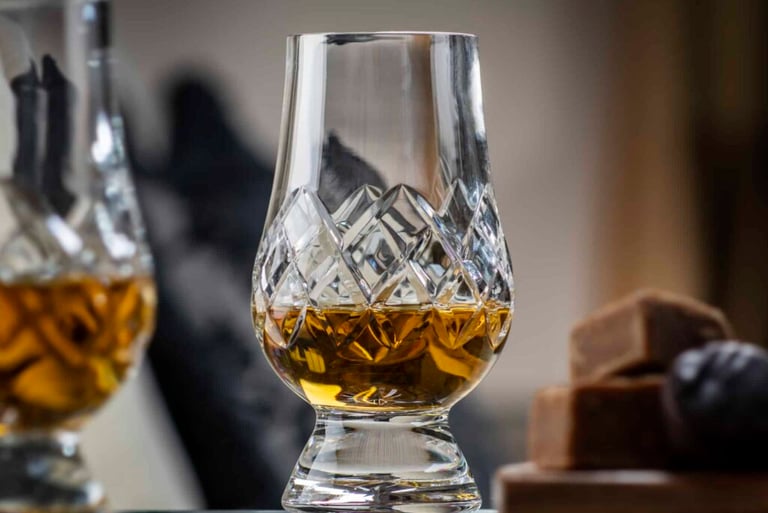
First, the eye beholds the color — amber, gold, copper, each shade telling a story of years in the barrel and the secrets the wood whispered to the spirit.
Then the nose encounters the bouquet — and here's where poetry begins its futile attempt to keep pace with reality. Vanilla? Perhaps. Raisins? Sometimes. Oak? Certainly. Endless chase of “what else it resembles me”... But also something indefinable, the way a sunrise is more than just light hitting clouds.
The palate discovers complexity — flavors that dance and quarrel and make peace on your tongue like a committee meeting that actually accomplishes something.
The mouth experiences the texture, the weight, the finish. Does it slide down smooth as a deacon's lie? Does it warm the chest like good news from home? Does it linger like a compliment from someone whose opinion you value?
And the ear — ah, yes, the ear. The gentle clink of ice (if you must, though I wouldn't), the glug of the pour, but mostly the sound of conversation that good whiskey enables. The stories told, the laughter shared, the comfortable silences between friends who need not fill every moment with noise.
This is best enjoyed in good company with good conversation — though I'll allow that on rare occasions, a man and his whiskey might need some time alone together, the way a fellow might take a walk to think things through.
A Brief Moral Tale About Value
The history teaches us about a prospector from California who spent three years searching for gold. Never found much — a few flakes, enough to keep him hoping but not enough to keep him fed properly. One evening, defeated and preparing to return East, he sat on a hilltop watching the sunset. The sky blazed orange and purple and gold, and in that moment, he realized he'd been surrounded by beauty the entire time he'd been pursuing wealth. He went home, took up painting, and died happy though never particularly rich.
The gold he'd been seeking was always there — just not in the ground.
Some people buy whiskey the way that prospector sought gold: frantically, blindly, missing what's right before them. They want the biggest bottle, the fanciest label, the most impressive age statement. They're so busy acquiring that they forget to appreciate.
Our whiskey isn't for them.
It's for the person who understands that true luxury isn't about having more — it's about savoring better. It's for someone who'd rather have one perfect evening than a hundred mediocre ones. It's for the individual who knows that a small batch of something exceptional beats a warehouse full of adequate.
A Word on Rarity and Worth
Mark this well: anything can be made rare by making less of it. I could declare that I'll only write one more book in my lifetime, and that would make it rare indeed — though whether it would be any good is another question entirely.
Our rarity isn't a trick of marketing. It's the natural result of doing something properly. Good whiskey, like good writing or good friends, cannot be rushed or mass-produced. The barrel doesn't care about your quarterly earnings report. The spirit doesn't mature faster because you've got investors to satisfy.
We make a few bottles because that's how many we can make while maintaining the standard we've set ourselves. Could we make more? Certainly. Could we make them cheaper? Absolutely. Could we sell them for less? Without question. But then they wouldn't be what they are — and we wouldn't be who we are.
There's a peculiar freedom in not trying to conquer the market. The big distilleries are like those fellows who build enormous houses to impress people they don't like. We're more like the man who builds a small, perfect cabin and invites only his friends to visit.
The Final Pour
So when someone asks why our whiskey costs what it does, I tell them what I've told you: it's not expensive — it's appropriately valued. The expensive whiskey is the one you drink without noticing it, the one that disappears down your throat like water down a drain, leaving nothing behind but a headache and a lighter wallet.
Ours asks to be noticed, to be considered, to be respected. Like that beautiful woman Mr. Murakami mentioned — you gaze first, you appreciate, and only then do you take your time with what's before you.
In conclusion, I offer these wishes: May you find joy in simple pleasures and complex flavors. May your glass be neither too empty nor too hastily filled. May your company be good and your conversation better. And may you always drink responsibly, which is to say: with attention, with gratitude, and with the understanding that the best things in life aren't those we consume the fastest, but those we remember the longest.
Cheers to you, and to the rare moments that remind us why living well beats living large every time.
Drink thoughtfully. Live memorably. And never trust a man who drinks good whiskey quickly.
Contact
Questions or thoughts? Reach out anytime.
info@quantumsatis.site
Phone: TBD
© 2026. All rights reserved.