
The Curious Case of Aged Equivalence
Or, How I Learned to Stop Worrying and Trust My Palate
CULTURECRAFTSCIENCEINNOVATION
1/4/20265 min read
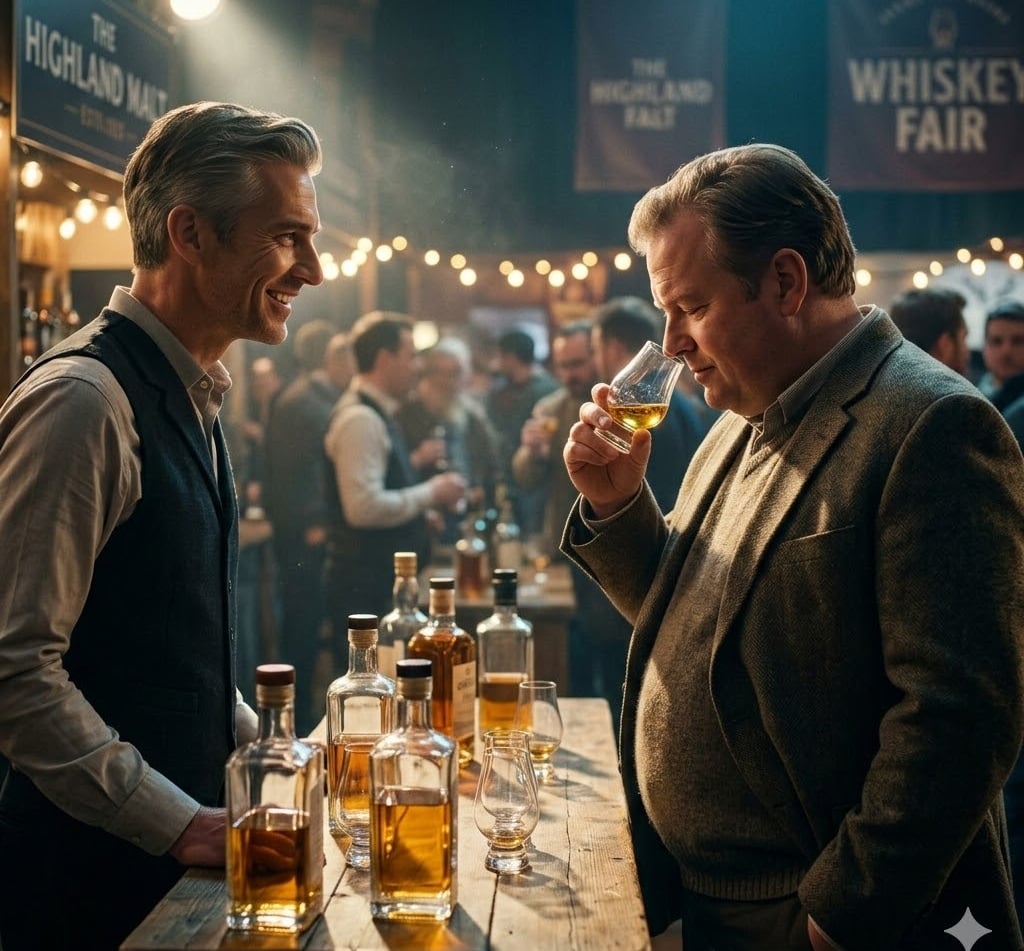
Being a True Account of a Conversation Overheard at the Spirits Exhibition, as Related by an Innocent Bystander.
Now, I don't claim to know much about whiskey—no more than a sensible man ought to know, which is to say, enough to tell good from bad and not so much as to make a fool of himself at parties. But I happened to be standing near the Quantum Satis booth at the International Spirits Fair when I witnessed a scene that taught me more about human nature than three years of Sunday school ever did.
A gentleman—and I use the term in its geographical sense only—approached the table with the bearing of a man who has read exactly three articles about Scotch whisky and means to deploy every sentence. His tweed jacket had leather elbow patches that appeared never to have met an actual elbow, and he wore the expression of a customs inspector who has just discovered contraband in a minister's luggage.
"I see," he announced, peering at the bottle with the suspicion generally reserved for love letters from strangers, "that you claim this to be 'aged fifteen years equivalent.'" He pronounced "equivalent" the way a Presbyterian elder might say "whiskey" at a temperance meeting.
The proprietor—a practical-looking fellow with steady eyes and the patient manner of a man who has explained things before and expects to explain them again—smiled like he'd been expecting this particular question since sunrise.
"That we do, sir. That we do."
"But it's not actually fifteen years old, is it?" The gentleman's tone suggested he'd caught the proprietor selling wooden nutmegs.
"No, sir. It's about fifteen months old."
You could have heard a cork drop.
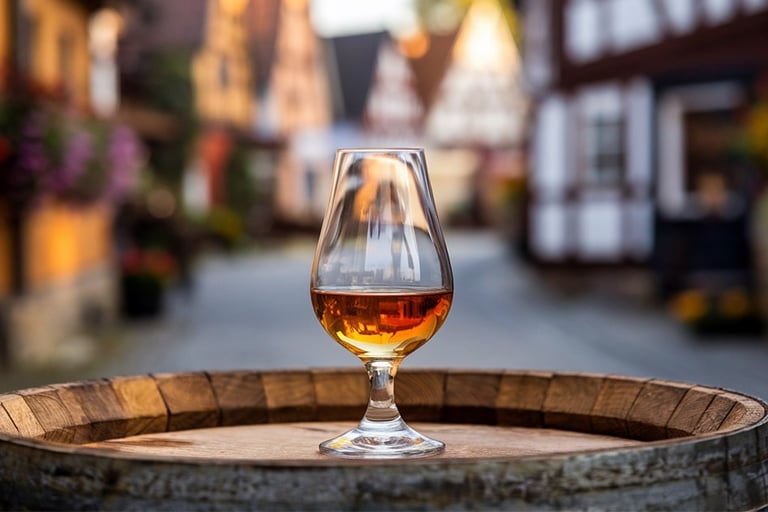
"Fifteen MONTHS?" The gentleman's voice climbed an octave. "And you dare compare it to fifteen YEARS?"
"Well," said the proprietor, unruffled as a cat in sunshine, "I don't compare it, exactly. I explain it. You see, aging ain't about time—it's about what happens during the time. Sort of like how two men can have fifteen years of experience, but one of 'em actually has one year of experience repeated fourteen times, while the other fellow kept learning and growing the whole stretch."
The gentleman blinked.
"Now," continued the proprietor, warming to his subject, "suppose you needed to hire a man. Two candidates walk in, both claiming fifteen years in the trade. First fellow tells you he learned the ropes his first year, then did the same job the same way for fourteen more. Nothing wrong with that—honest work is honest work. But the second fellow, he spent all fifteen years mastering new skills, studying innovations, staying sharp. Which man would you hire?"
"Well, the second, naturally, but—"
"Exactly! Because you ain't paying for years—you're paying for what them years produced. The quality of the experience, not the quantity of the calendar pages that got torn off meanwhile."
The gentleman opened his mouth, then closed it, looking like a man who'd prepared for an argument and found a conversation instead.
"Our whiskey," said the proprietor, pouring a generous measure, "spends fifteen months in an environment engineered to give it what most whiskey gets in fifteen years of sitting around waiting for something to happen. We control temperature, we cycle it like seasons, we use fresh oak every time, we maximize contact with the wood. It ain't magic—it's just paying attention to what actually matters instead of watching clocks."
"But tradition—"
"Tradition," interrupted the proprietor gently, "is just a fancy word for 'how we used to do it when we didn't know any better.' Scottish distillers age whiskey slow because Scotland is cold and they didn't have a choice. If they'd had temperature control, you think they'd have said 'No thank you, we prefer to wait'? They waited because they had to, not because waiting is sacred."
He pushed the glass forward.
"The label says 'aged fifteen years equivalent' so you know what to expect when you taste it. Not because we're claiming to be something we're not, but because your brain needs a reference point. If I just said 'fifteen months,' you'd expect something raw and young. But this here"—he tapped the glass—"this has the depth and complexity of a much older spirit, because we gave it fifteen years worth of wood interaction in fifteen months. The oak don't know how long it took. The chemical reactions don't have calendars. And your tongue won't know the difference unless you tell it what to think."
The gentleman, I noticed, had unconsciously picked up the glass during this speech. He swirled it. Sniffed it. And then—inevitably, as gravity pulls water downhill—he tasted it.
His eyebrows did something complicated.
"That's... that's actually quite good."
"Gold medal at the London competition," said the proprietor, matter-of-fact. "Judged blind. Panel didn't know if it was fifteen months or fifteen years. They just knew it was good whiskey."
The gentleman took another sip, slower this time, thoughtful.
"So the 'equivalent' isn't a claim," he said slowly, "it's a... translation?"
"Exactly right! It's like saying 'this book is 300 pages long.' The page count tells you what kind of reading experience to expect, but it don't tell you if the book is any good. The pages is just information. The quality—well, that's in the tasting."
"And the medals prove..."
"The medals prove that when experts taste it blind, they think it's worth a gold medal. That's all. We're not asking you to take our word for how good it is. We're just explaining how we made it, so you understand why it tastes like it does."
The gentleman set down his glass—empty, I noticed—and had the grace to look slightly sheepish.
"I suppose I was rather prepared to dislike it."
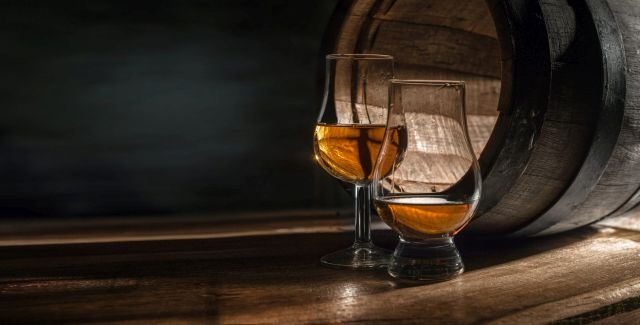
"Most folks are," said the proprietor kindly. "Human nature. We trust old things because they've survived, and we mistrust new things because they might be tricks. But whiskey ain't about old or new—it's about good or bad. And good is good, whether it took fifteen years or fifteen months to get there."
"Though," he added with a wink, "the fifteen-month version does have one distinct advantage."
"What's that?"
"You don't have to be patient enough to wait fifteen years to drink it. And patience, in my experience, is a virtue most men discover they lack right about the time they're told they have to exercise it."
The gentleman laughed—a real laugh this time, not the polite kind—and purchased two bottles.
_______________
Now, I don't know if that story enlightens anybody about the nature of aging equivalents in premium spirits, but I do know this: I tried the whiskey myself afterward, and it was damn fine. Whether it was fifteen months or fifteen years, I couldn't tell you. But I can tell you it was worth what I paid for it, and I didn't have to wait until my children were grown to drink it.
And that, as near as I can figure, is the whole point.
The only tradition worth keeping is the one that says good is good, no matter how you get there. The rest is just stories we tell ourselves while we're waiting for something to happen.
Or, as my grandfather used to say: "Son, don't confuse sitting around with accomplishing something. One feels like work, but only one actually is."
I believe he was talking about farming, but I reckon it applies to whiskey just the same.
________________
Author's Note: No whiskey snobs were harmed in the making of this story, though several were gently educated. The whiskey, regrettably, did not survive the research process.
Contact
Questions or thoughts? Reach out anytime.
info@quantumsatis.site
Phone: TBD
© 2026. All rights reserved.