
Not All Oaks Are Created Equal
The whiskey industry's best-kept secret: oak type shapes your drink more powerfully than age, grain, or distillery tradition. Here's why and how.
SCIENCE
2/2/20264 min read


The Tale of Two Spitfires
At an airshow in Duxford, England, I once stood between two Supermarine Spitfires—both built in 1943, both exactly 83 years old. On paper, identical twins separated at birth.
The first had spent decades in a humid Australian hangar, neglected, its aluminum corroding, hydraulics seized, fabric control surfaces rotting from the inside out. Restorers had salvaged it, but you could see the scars—patches, replacements, compromises. It flew, technically, but it wasn't the same machine that left the factory.
The second had lived in a climate-controlled British museum, meticulously maintained, every rivet inspected, every system rebuilt with period-correct materials by craftsmen who understood not just how to fix it, but why it was built that way. When its Merlin engine roared to life, it sounded like 1943 had never ended.
Same age. Completely different stories.
The mechanic, wiping oil from his hands, saw me staring. "Age don't mean nothing," he said in a thick Midlands accent. "It's what happened during those years that matters. Where they lived, who took care of them, what they went through. The calendar's just a number. The condition—that's the truth."
I thought about that conversation six months later, standing in a distillery warehouse surrounded by oak barrels. Some were first-fill American oak, practically vibrating with vanilla and caramel intensity. Others were tired third-fill casks, barely whispering after decades of reuse. All of them "aging" whiskey. None of them aging it the same way.
The Spitfire mechanic was right: the calendar is just a number. In whiskey, as in aircraft, what matters isn't how long something has existed—it's what happened to it while it did.
This is the story of what happens inside those barrels, and why the wood's biography matters more than the bottle's birthday.


Different oak types in whiskey barrels significantly shape the spirit's color and aroma through their unique wood compounds, grain structure, and prior seasoning (like sherry casks). American oak delivers bold sweetness, while French and sherry-influenced oaks add elegance and fruitiness.
American Oak
This wood, typically Quercus alba, has a loose, wide grain that allows rapid flavor extraction, yielding deep amber colors from high vanillin and tannins. Aromas feature prominent vanilla, caramel, coconut, and toasty notes, ideal for bourbon's rich profile.
French Oak
Denser than American oak, French oak (often Quercus robur or sessilis) produces subtler interaction, resulting in lighter golden-amber hues. It imparts fruity aromas like dried fruits, cherries, cherries, clove, nutmeg, and spice, enhancing Scotch whiskies' complexity.
Sherry Casks (Oloroso, Spanish Oak)
These European (often Quercus robur from Spain) barrels, previously used for Oloroso sherry, add mahogany depths from tannins and pigments. Aromas burst with dried fruits (raisins, figs), nuts, chocolate, spice, and oxidative richness, creating smooth, nutty whiskey.
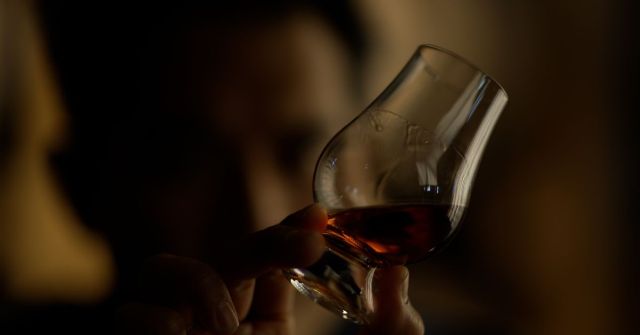
French oak typically imparts the lightest yellow-pale color to whiskey among common barrel types, due to its tighter grain structure that allows slower extraction of color compounds like tannins.
Why French Oak?
Its dense wood results in subtler pigmentation compared to American oak's deep amber or sherry casks' mahogany tones, often yielding pale gold or straw hues especially with lighter toasting. This suits many Scotch single malts seeking elegance over bold intensity.
Oak Color Comparison
"Age is an issue of mind over matter. If you don't mind, it doesn't matter."
-- Mark Twain
Whiskey barrels can typically be refilled 2-3 times while still imparting reasonable nose and palate, though flavor diminishes significantly after the first fill due to depleted wood compounds.
Reuse Limits
First-fill barrels extract 50-80% of flavor congeners like vanillin and tannins, yielding bold aromas and taste; second or third fills add subtler oak notes but risk off-flavors from bacteria buildup. Beyond 3-4 fills, the impact is minimal, often resulting in muted, woody whiskey unsuitable for premium products.
Aging Time Changes
Aging time is not the same for each fill—inverse correlation applies: later fills require longer maturation (e.g., 20-50% more time) for comparable flavor intensity since extraction slows. Dependency stems from exhausted flavor reserves and wood openness; warmer/cooler cycles still aid oxidation, but less effectively.
Flavor Impact Over Fills
Choose Your Oak Wisely (And Your Friends More Carefully)
So there you have it: the oak makes the whiskey, the barrel's biography matters more than the bottle's birth certificate, and American, French, and sherry casks are basically three different artists painting with the same canvas.
Armed with this knowledge, you can now be insufferable at parties. "Oh, is this American oak? I'm getting distinct Quercus alba grain structure here—very porous, rapid vanillin extraction, probably second-fill given the subdued coconut notes." Watch your friends' eyes glaze over. Watch the host regret inviting you.
Or you could just enjoy the whiskey, secure in the knowledge that when someone tries to impress you with a 30-year age statement, you can smile knowingly and ask the only question that matters: "But what was it aged in?"
I am sure you also encountered in your life the situations when not only time matters but the quality of ticking seconds passed. Time works for everyone and everything at the same pace. The difference in the experience and the results is in what we, people, do with that time.
Like those 2 legendary fighters, we reach different results by paying, or not paying enough attention, labor, and mind along the time.
Contact
Questions or thoughts? Reach out anytime.
info@quantumsatis.site
Phone: TBD
© 2026. All rights reserved.